ServicesWater Extraction
Water Extraction in Colonial Heights
When a supply line bursts or a water heater fails, the water keeps wicking into carpet pad, drywall and subfloor for as long as it sits. We pull it out with high-powered extractors and weighted wands, meter where it traveled and set your home up to dry.
Why Extraction Comes Before Anything Else
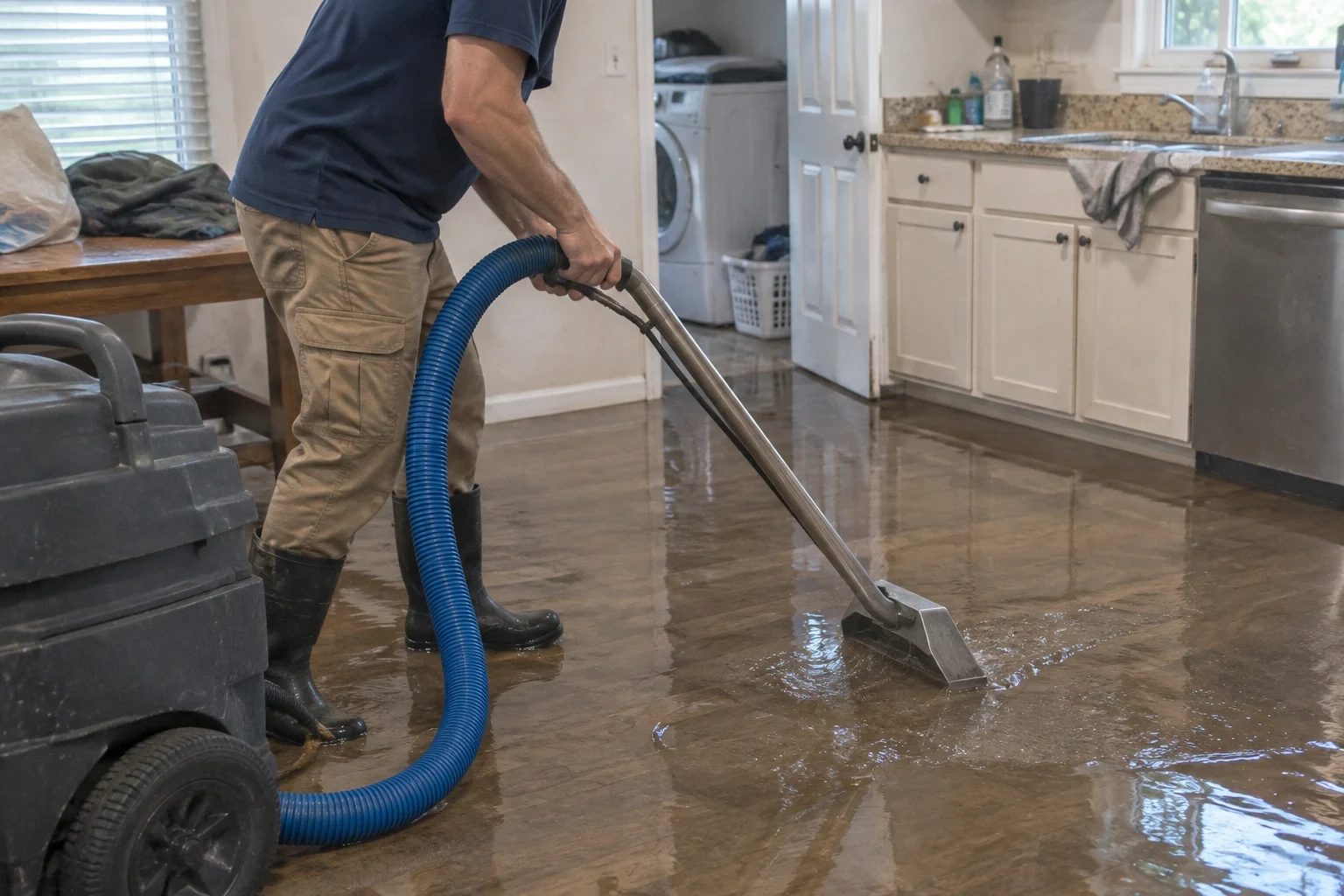
Extraction is the physical removal of liquid water. It is the first step because it is by far the fastest way to get water out of a building. A good extractor pulls more water from a soaked carpet in an hour than dehumidifiers can pull from the air in days. Skip it, and the drying equipment spends its time fighting bulk water while the wood and gypsum underneath keep soaking.
It is the right call any time water has pooled, soaked through flooring or run into a wall cavity or the space below the floor. That covers a cracked washing machine hose, an overflowing toilet, a failed ice maker line or a pinhole leak in a copper supply. A lot of houses around here sit over vented crawl spaces, so water that disappears through the floor is often sitting on the vapor barrier below, and we check there too.
What Our Water Extraction Covers
Standing water removal
We clear pooled water from floors, utility rooms and basements with portable extraction units. Deep water gets a submersible pump first.
Carpet and pad extraction
Weighted extraction wands press down into the carpet so the vacuum pulls water out of the pad, not just the face fibers. Pad acts like a sponge and is often cheaper to replace than to save. We tell you which way we recommend and why.
Hard floor water removal
Water slips through the seams of laminate and luxury vinyl plank and gets trapped underneath. Solid hardwood starts to cup as the bottom of each board swells. We extract the surface and check below it so a dry-looking floor does not hide a wet subfloor.
Crawl space and basement pump-out
We pump water off vapor barriers and slab floors, then pull out any soaked insulation hanging between the joists. Wet fiberglass batts hold water against the wood and do not dry in place.
Moisture mapping
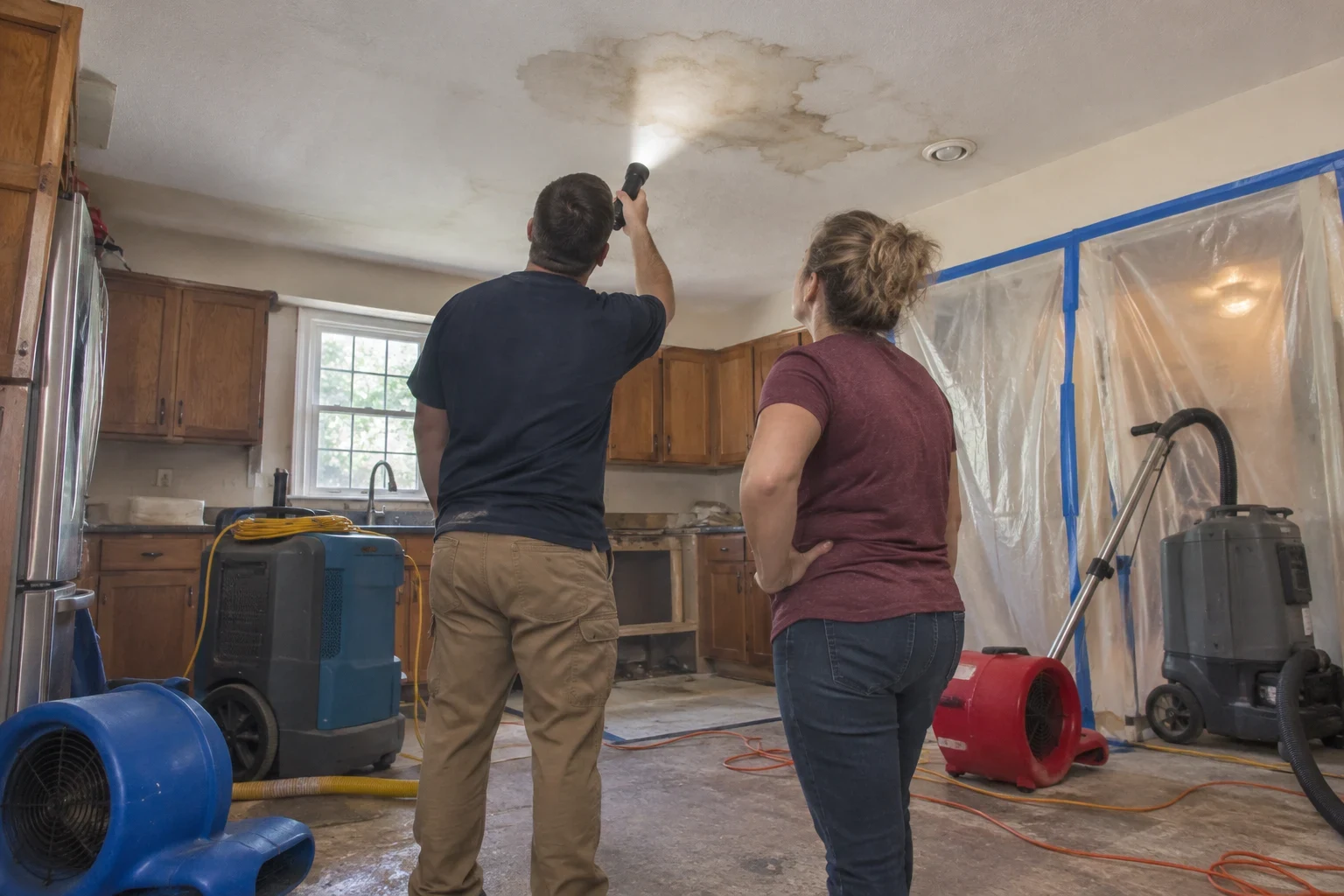
Pin and pinless meters, plus a thermal camera, show how far the water wicked into drywall, baseboards and framing. We mark the readings and photograph them so the drying plan and your insurance file both start from the same facts.
Signs You Need Water Extraction
- Carpet squishes underfoot
- If you can press water out of the carpet with your foot, the pad underneath is saturated. Towels and a shop vac will not reach it.
- Baseboards swelling or paint bubbling
- MDF baseboards swell and split at the seams when they sit in water. Bubbling paint on the lower wall means drywall is wicking it upward.
- Hardwood boards cupping
- Edges rising higher than the center of each board means moisture is coming from underneath. The longer it stays, the less likely the boards flatten back out.
- Stain on the ceiling below a bathroom
- A brown ring under a tub, shower or toilet means water is collecting on top of the drywall. Ceilings can sag and drop when they hold enough of it.
- A musty smell from the floor
- A damp, earthy smell near floor registers often points to water in the crawl space or ductwork. It is worth checking even if the floors look dry.
How a Water Extraction Visit Runs
- 1
You call, we head out
Someone answers the phone for water extraction at any hour of the day or night. We're On site in 60 mins or less, and while the truck is on the road we'll walk you through finding and closing the main shutoff valve if water is still running.
- 2
Make it safe and find the source
We kill power to circuits near wet areas and confirm the leak has stopped. Then we classify the water, because a burst supply line, a washer discharge and a drain backup each call for different gear and handling. Anything that came up from a drain goes to our sewage cleanup process.
- 3
Move contents and extract
Furniture is set up on blocks or carried out of the wet zone. Then we extract the floors, pump out low spots and pull any pad or insulation that can't be saved.
- 4
Meter, photograph and hand off to drying
We map moisture in every affected room and photograph what we found. From there the job moves into drying and dehumidifying, and we explain which equipment is going where and for how long.
What Affects the Cost of Water Extraction
The price of extraction depends on how much water there is, how far it traveled and what it soaked into. We measure all of that during the free on-site inspection and walk you through each line item before work goes past the emergency steps. Many of these jobs end up as insurance claims, and we work with most major insurance companies.
- Square footage and spread
- A single wet bathroom is a short job. Water that ran under walls into three rooms and a hallway takes longer to extract and to meter.
- Category of water
- Clean water from a supply line lets us save more materials. Gray or contaminated water means more removal and protective handling.
- What got wet
- Carpet and pad, laminate, hardwood and insulation each extract differently. Materials that have to come out add removal and disposal time.
- Access
- Working on our backs in a low crawl space, or around cabinets and shelving built into a finished lower level, is slower than running a wand across an open concrete slab. More hours on site means more labor on the estimate.
Water Extraction Questions
- Can I just use a shop vac and some fans?
- For a small spill on tile, often yes. Once water reaches carpet pad, a wall cavity or the space under a floor, a shop vac only gets the surface. Fans alone can also push moisture deeper into drywall instead of removing it.
- Will my carpet have to be thrown out?
- Not always. Carpet soaked with clean water can often be extracted and dried in place, though the pad is usually replaced. Carpet soaked with gray or sewage water generally has to go.
- Will insurance pay for water extraction?
- Many homeowner policies cover sudden losses such as a burst pipe. Slow leaks that ran for months are often treated differently, and water that came in from outside is usually a matter for flood coverage, which is written as its own policy. We work with most major insurance companies, and the moisture readings and photos we take go into your claim file. Your adjuster makes the coverage decision.
- How long does extraction take?
- A single room usually takes a few hours, including moving contents and metering. Larger losses with pad removal or a crawl space pump-out can run most of a day. Drying afterward takes several more days.
- Do I need to leave my home?
- Usually not for clean water losses. We'll tell you if contaminated water, wet electrical or a sagging ceiling makes part of the house unsafe to use.
Get the Water Out Before It Spreads
Every hour water sits, it works further into flooring, pad and the bottom of your walls. Pick up the phone and we'll come out, measure the damage and tell you plainly what has to happen next.