ServicesDrying and Dehumidifying
Drying and Dehumidifying in Colonial Heights
Standing water is only part of the problem. The rest is soaked into your drywall, framing and subfloor. We set up dehumidifiers and air movers, measure moisture every day and keep drying until the readings match the dry parts of your home.
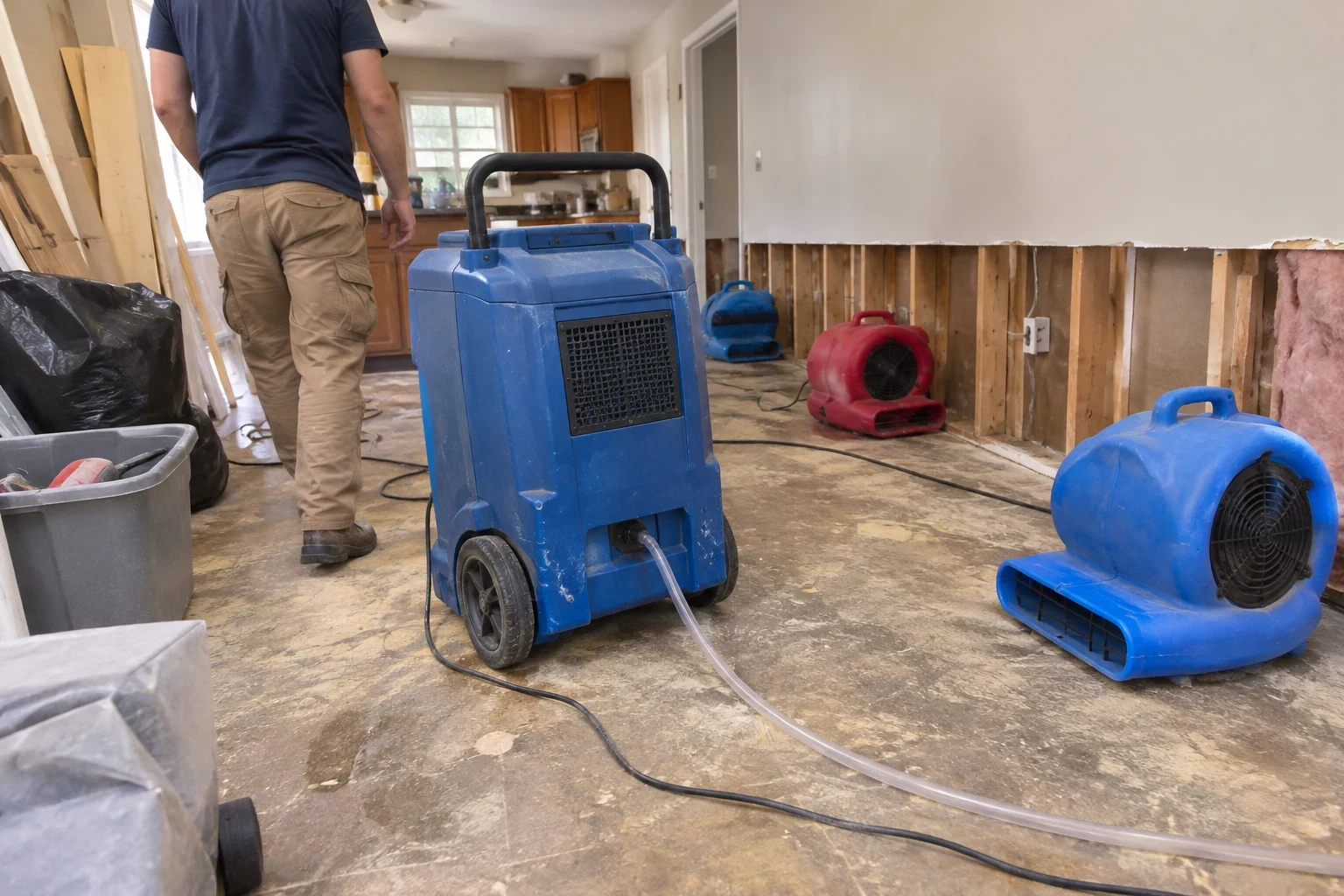
What Drying Actually Means After a Leak
Water extraction removes what you can see. Drywall, wood studs, OSB and plywood subfloor, insulation and the pad under carpet all absorb water and hold it long after the floor looks dry. Gypsum wicks water upward through capillary action, often a foot or more above the waterline. Wood swells as its fibers take on moisture. Left alone, those materials stay wet for weeks, and mold can begin growing within 24 to 48 hours.
Our drying and dehumidifying work removes that bound moisture in a controlled way. We close off the affected area into a drying chamber, run low-grain refrigerant dehumidifiers to pull water out of the air, and aim air movers across wet surfaces so moisture leaves the material and gets captured. Opening windows feels helpful, but on a humid Colonial Heights summer day the outside air often carries more moisture than the room you are trying to dry.
This is the right service after a burst supply line, a failed water heater, a dishwasher or ice maker leak, or right after our water extraction crew finishes. If the water came from a sewer backup or rising floodwater, drying follows sewage cleanup or flood cleanup, because contaminated materials have to come out first.
What Our Drying Work Includes
- Moisture mapping
- We check walls and floors with both pin-type and pinless meters, then scan with a thermal imaging camera to find where water spread behind drywall and beneath flooring. We mark the wet boundary so nothing gets missed.
- Low-grain refrigerant dehumidifiers
- A typical household unit loses steam once the air starts to dry out, but low-grain models keep condensing water out at much lower humidity levels. We match the number of units to the room volume and how much wet material is in it.
- Directed airflow
- Air movers are angled along walls and across floors to break up the damp layer of air sitting on wet surfaces. That speeds evaporation so the dehumidifiers can capture it.
- Wall cavity and hardwood drying
- For wet walls we can drill small holes behind the baseboard line and push dry air into the cavity, which often saves the drywall. For cupped hardwood we use drying mats that draw moisture up through the boards.
- Crawl space drying
- Many homes here sit on vented crawl spaces where joists and subfloor stay wet out of sight. We dry the framing from below and check the vapor barrier and insulation.
- Daily readings with photos
- Every visit we log moisture readings, temperature and humidity, and photograph the setup. You and your insurance adjuster get a clear record of how the job progressed.
Signs Your Home Is Still Holding Water
Swollen or soft baseboards
MDF baseboards and the bottom edge of drywall swell and crumble when they stay wet. Pressing on them leaves a dent.
Cupping or crowning hardwood
Boards with raised edges are wetter on the bottom than the top. That usually means water is trapped in the subfloor below.
A musty smell days later
An earthy odor after the visible water is gone points to damp materials and the early stage of microbial growth.
Carpet that feels cool and damp
The pad under carpet holds water like a sponge. If the carpet surface feels cool to the touch days after a leak, the pad is still wet.
Bubbling paint or loose tile
Paint blisters and grout cracks when moisture pushes out from behind. It is a sign the wall or floor assembly behind it never dried.
Sweating ducts in the crawl space
Condensation on ductwork or damp insulation hanging from the joists means humidity under the house is too high.
How a Drying Job Runs
- 1
Inspection and moisture map
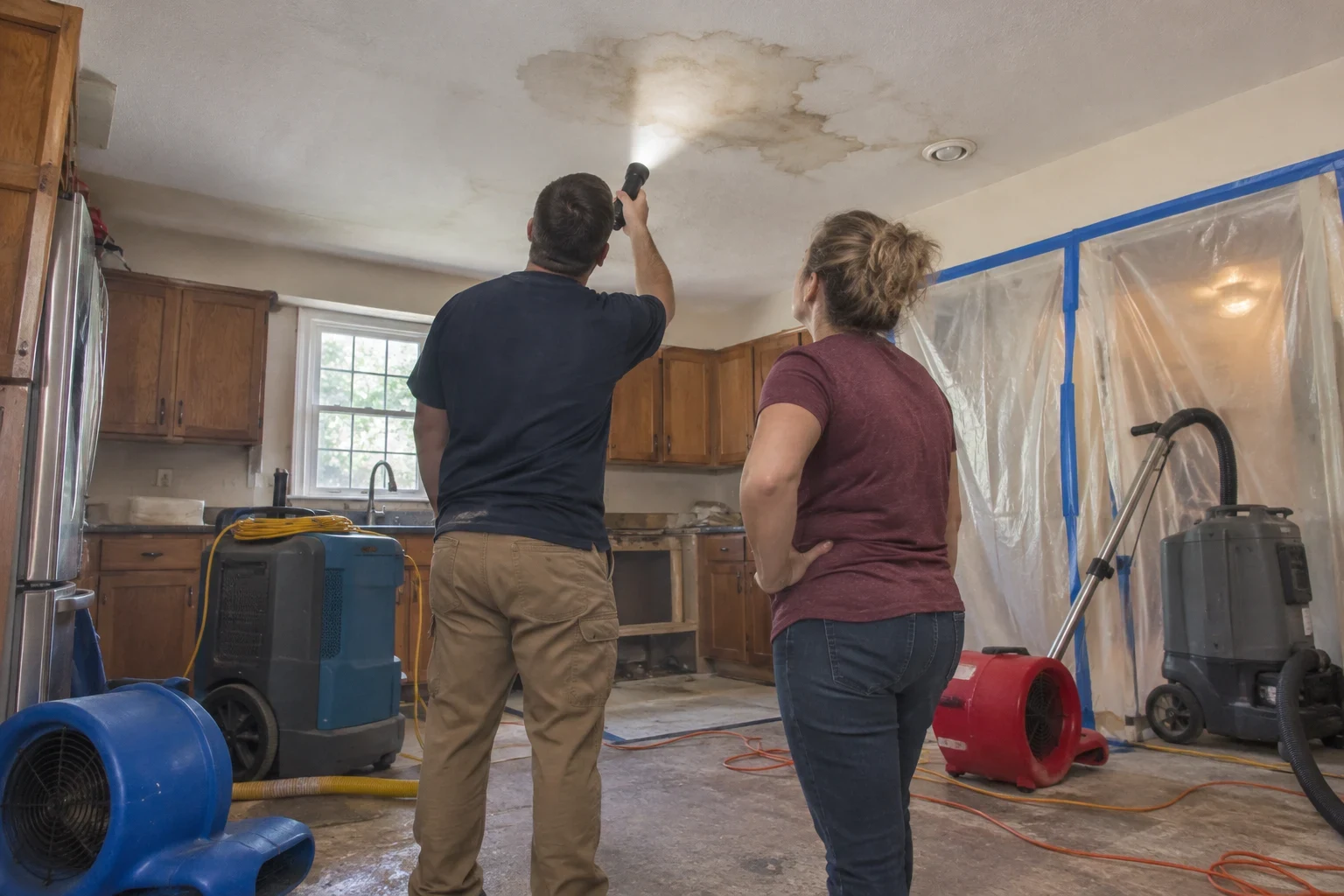
We take readings in the wet area and in an unaffected room of the same home. That dry reading becomes the target, so we are drying to your house's normal, not a guess.
- 2
Remove what cannot be dried
Saturated carpet pad, swollen MDF trim and insulation that has collapsed usually cannot be saved. We explain each item before it comes out and photograph it for your claim.
- 3
Set up the drying chamber
We seal off the area with plastic where needed, place dehumidifiers and air movers, and set up wall cavity or floor drying systems. The equipment runs around the clock and draws ordinary household power.
- 4
Daily checks and adjustments
Each day we record readings, empty or check drain lines and move equipment toward the areas drying slowest. As materials dry, we pull units out.
- 5
Dry verification
Once the last wet spot reads the same as your unaffected room, our crew packs up the equipment and hands you a copy of every daily reading. If walls or floors need replacing, our repairs and rebuild crew can take it from there.
What Moves the Cost of Drying
Drying is priced mostly by how much material is wet and how many days the equipment has to run. We give you a free on-site inspection and explain the scope before setup. We work with most major insurance companies, and our daily readings are the documentation adjusters look for.
- Size of the wet area
- Each added room or stretch of wet floor calls for additional dehumidifiers and air movers to keep up. If water slipped under a wall plate into the next room, that space joins the drying chamber too.
- Materials involved
- Hardwood, plaster walls and dense subflooring dry slower than carpet and drywall. Plaster in older homes can take noticeably longer to release moisture.
- How long water sat
- Water caught early often stays in the surface layers. Water that sat for days soaks deeper, can require removing more material and adds drying days.
- Access and location
- Crawl spaces, finished basements and wet cavities behind cabinets take extra labor and specialty equipment to reach.
Drying and Dehumidifying Questions
Something not covered here? (804) 374-8594
How long does it take to dry my home?
Many jobs run several days, but the meter readings decide, not the calendar. Drywall and carpet release water faster than hardwood, plaster or thick subfloor. We check every day and remove equipment as each area reaches its dry target.
Can I just run fans and a box store dehumidifier?
Fans alone move water around without removing it, and a household dehumidifier slows down as humidity drops. Neither one reaches water inside wall cavities or under hardwood. Without meter readings there is also no way to know when the materials are actually dry.
Do I have to leave while the equipment runs?
Most people stay home. Dehumidifiers and air movers hum steadily and give off heat, so shutting the door to the drying area overnight makes sleeping easier. We keep walkways clear and route cords so you can move through the house safely.
Can my hardwood floors be saved?
Often, if drying starts soon after the leak. Cupped boards frequently flatten as the subfloor dries under drying mats. If boards stay deformed after they reach normal moisture, we will tell you plainly and document it for your claim.
What if the leak happens at night?
Call us anyway, because emergency calls are part of what we handle at any hour. For those calls, our offer is on site in 60 mins or less. Getting dehumidifiers running early keeps water from wicking deeper into framing and subfloor, which means less material has to come out.
Get the Moisture Out Before It Spreads
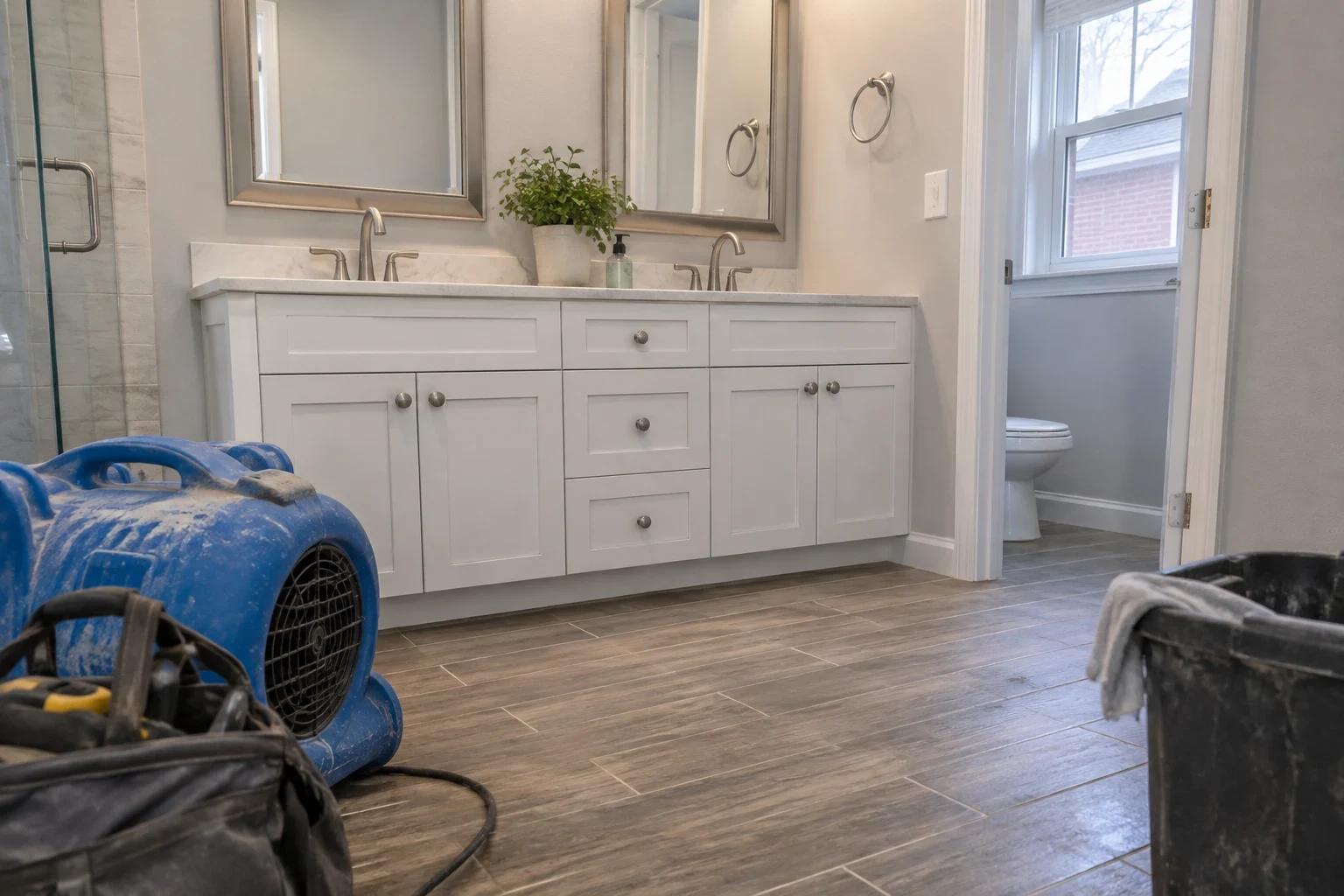
Wet materials keep getting worse every day they sit. We will measure where the water went and show you what it takes to dry it properly.