ServicesRepairs and Rebuild
Colonial Heights Repairs and Rebuild After a Water Loss
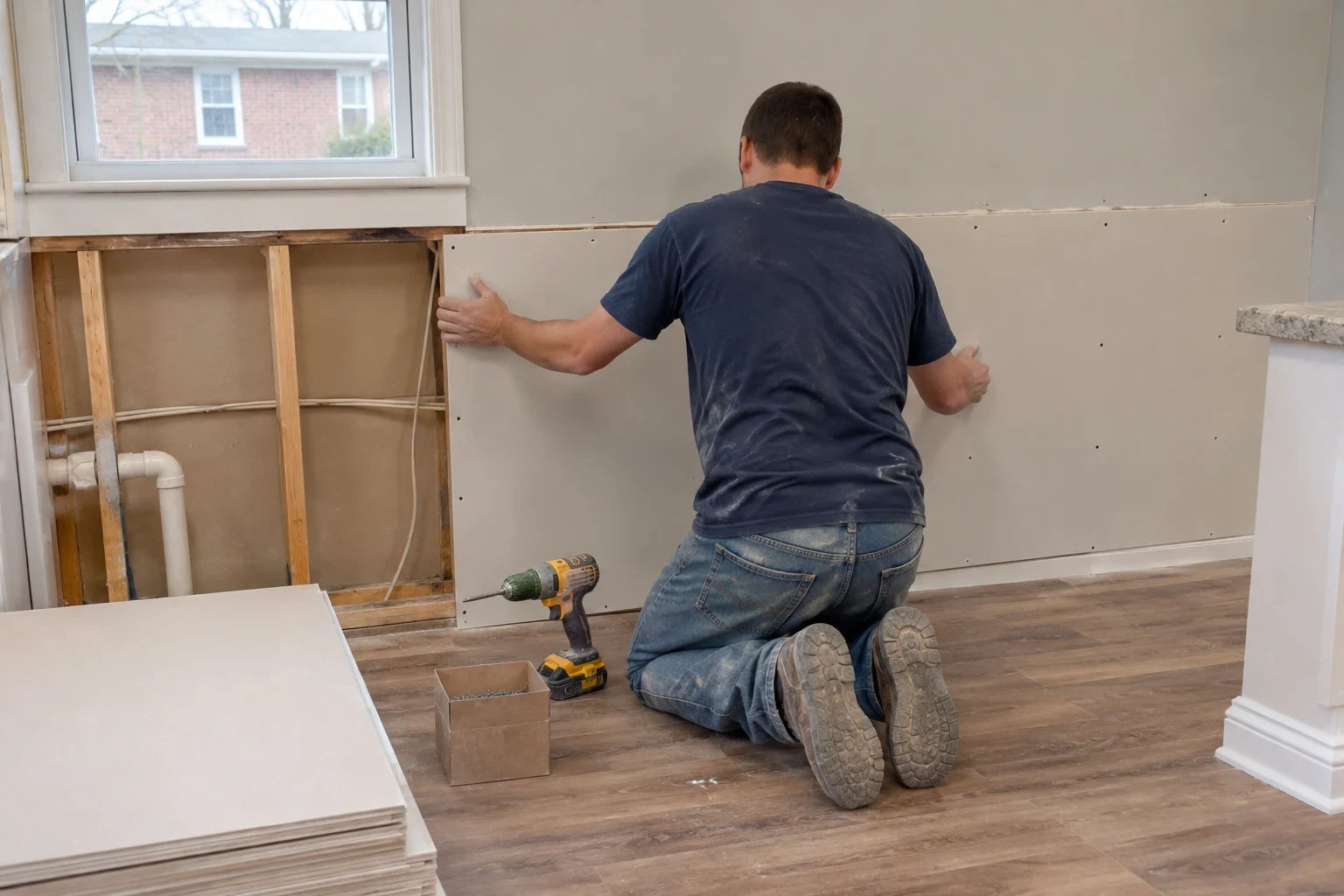
Drying stops the damage, but it leaves open wall cavities, missing baseboards and subfloor that may have swelled. We put those rooms back with drywall, flooring, cabinets and trim matched to the rest of your home, and we record every step so your claim and the finished work agree.
What repairs and rebuild covers
Repairs and rebuild is the last stage of a water loss. Water extraction removes the standing water. Drying and dehumidifying brings framing and subfloor back to normal moisture content. Then we put the rooms back together: insulation, drywall, flooring, cabinets, trim and paint.
Rebuilding too early is the most common mistake we see. Drywall hung over studs that still read wet traps moisture inside the wall cavity, and mold can start there within days. We take moisture meter readings on the framing and subfloor before any new material goes up, and we keep those readings in your file.
Many homes in the area are brick ranches and split-levels over a crawl space, often with plank subfloors, plaster walls or trim profiles that no big-box store carries anymore. We plan the match before anything new is ordered, so the repaired room looks like it was never touched.
What the rebuild work includes
- Drywall and insulation
- We cut wet drywall at a level line above the wick height, usually 2 or 4 feet, so the new sheet lands on a stud and the seam can be hidden. Fiberglass batts that held water get replaced, because wet insulation loses its R-value and keeps moisture pressed against the studs. Seams are taped, finished and textured to match the wall around them.
- Subfloor and flooring
- Particleboard underlayment swells and crumbles once it gets wet, so it comes out. Plywood or plank subfloor that dries flat and sound can usually stay. We replace the damaged sections, then install hardwood, LVP, tile or carpet to match or replace what was lost.
- Cabinets and trim
- Base cabinets with particleboard boxes tend to swell at the toe kick and rarely recover. We replace or rebuild the boxes, reset countertops and sinks, and source or mill baseboard and casing to match your existing profiles.
- Paint and finish
- Water lines bleed through ordinary paint, so we prime them with a stain-blocking primer first. We usually paint the full wall or room rather than a patch, so the new section blends in.
- Permits and inspections
- When the work involves structural framing, electrical or plumbing, a building permit is often required. We pull it and schedule the inspections, so the repair is on record if you ever sell.
Signs your home needs repair work after water
Soft or bowed drywall
Gypsum loses strength when wet. If the bottom of a wall gives under your thumb or the paper face is bubbling, that section has to be replaced.
Cupped or spongy floors
Hardwood boards that curl at the edges, or a floor that flexes near a tub or dishwasher, point to a wet or damaged subfloor underneath.
Swollen cabinet bases
Peeling laminate and a toe kick that has puffed up mean the particleboard has absorbed water and will not shrink back.
Stained ceilings
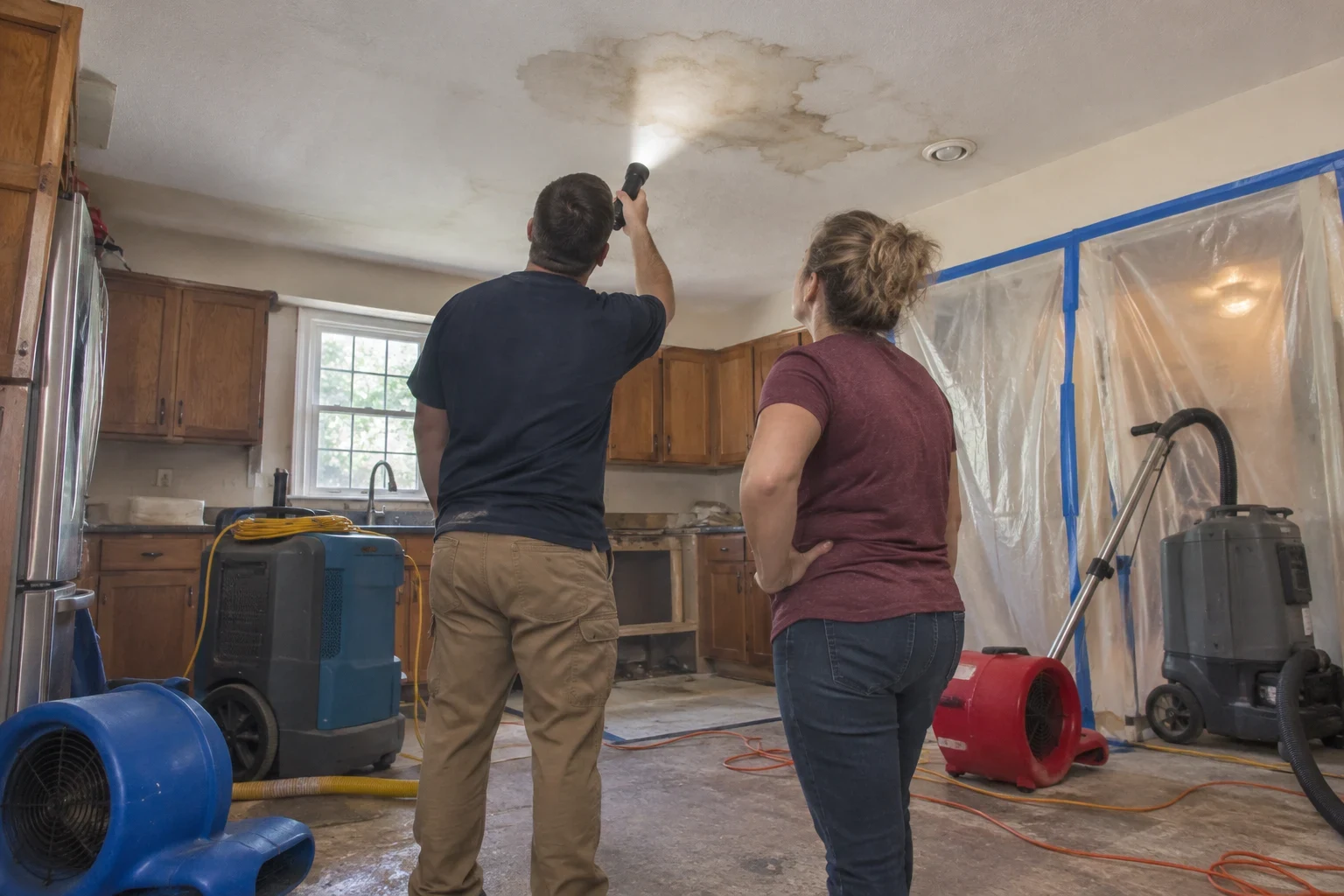
A brown ring below a bathroom or an attic air handler shows water has soaked the drywall and possibly the insulation above it.
A musty smell that stays
An odor that lingers after cleanup often means moisture is still trapped in a wall or crawl space. We check that first, and if growth is present, mold remediation comes before rebuild.
What moves the price of a rebuild
We price each rebuild from the inspection, not from a square-foot guess. Your written estimate lists each material and task, so you and your adjuster are looking at the same numbers. These are the things that move the total most.
How far the water wicked
A 2-foot flood cut on one wall is a small job. Water that climbed higher or spread under several rooms means more drywall, insulation and flooring.
Matching existing materials
Stock drywall and paint are simple. Discontinued hardwood, plaster walls or custom trim profiles take more time to source or reproduce.
What is underneath
Once walls and floors are open, we sometimes find softened sill plates or joists in the crawl space. Structural repair adds labor and may require a permit, and we show you photos before it goes on the estimate.
Trades and permits
If outlets, wiring, supply lines or a water heater got wet, electrical or plumbing repairs and the inspections that go with them become part of the scope. Those steps add time and cost, and we list them separately so you can see why.
From open walls to finished rooms
- 1
Free inspection of the damaged rooms
A technician goes room by room with a moisture meter and a camera, recording readings and documenting what water touched. Along the way we list each material that has to match, such as drywall thickness, flooring species and trim profile.
- 2
Line-item scope and claim paperwork
Before work begins, you get a written estimate that breaks out every material and task. We send the same photos and readings to your adjuster. We work with most major insurance companies, though coverage is settled between you and your insurer.
- 3
Recheck moisture and set up protection
On the first work day we take fresh readings to confirm the framing is still dry. Then we cover the floors along our path and hang plastic sheeting so drywall dust stays out of the rest of your home.
- 4
Build back in the right order
Framing repairs go first, followed by any required inspection, then insulation, drywall, flooring, cabinets, trim and paint. That order keeps finished surfaces from being scuffed or dented by work that comes after them.
- 5
Final cleanup and room-by-room review
We haul out debris, vacuum and wipe every surface. You then look over each room with us, and anything that is off gets corrected before the job is closed out.
Repairs and rebuild questions
Can you start rebuilding as soon as the water is out?
Not until the materials test dry. Framing and subfloor need to reach normal moisture content, which usually takes a few days of drying equipment. Closing walls before then risks mold and a second tear-out.
Will my insurance pay for the rebuild?
If the water loss is covered, the rebuild is usually part of the claim. We work with most major insurance companies and provide the line-item estimate, photos and moisture readings your adjuster asks for. Your policy and your adjuster decide what is covered, and we explain what we see without making that call for them.
Will we need to stay somewhere else while you rebuild?
Usually not. We close off the work area with plastic sheeting and lay protection over the floors we walk across, so the rest of your home stays usable. When the damage takes out the kitchen or the only working bathroom, a few nights away can be easier, and we will say so plainly during the inspection.
Can you match my existing hardwood floors and trim?
In most cases, yes. We bring a sample or photo of the board or molding to suppliers, and when a profile is no longer made, it can be milled to match. If an exact match is not possible, we explain the options before ordering anything.
What if the water is still coming in?
Then the rebuild waits, because new drywall over an active leak just gets ruined again. Call us and treat it as an urgent job. A crew is on site in 60 mins or less to help stop the spread and begin water extraction, and rebuilding follows once the house tests dry.
Get the rooms back, built on dry framing
We will measure the moisture, photograph what is damaged and give you a written scope before any work starts. Homes in Colonial Heights, Chester, Petersburg and Hopewell are all in our area.