ServicesSewage Cleanup
Sewage Cleanup in Colonial Heights
When a drain backs up, the water in your home is Category 3, which means it carries bacteria and viruses from the sewer. We remove it, take out the porous materials it soaked, disinfect what can be saved and dry the structure so the space is safe again.
What sewage cleanup involves and when you need it
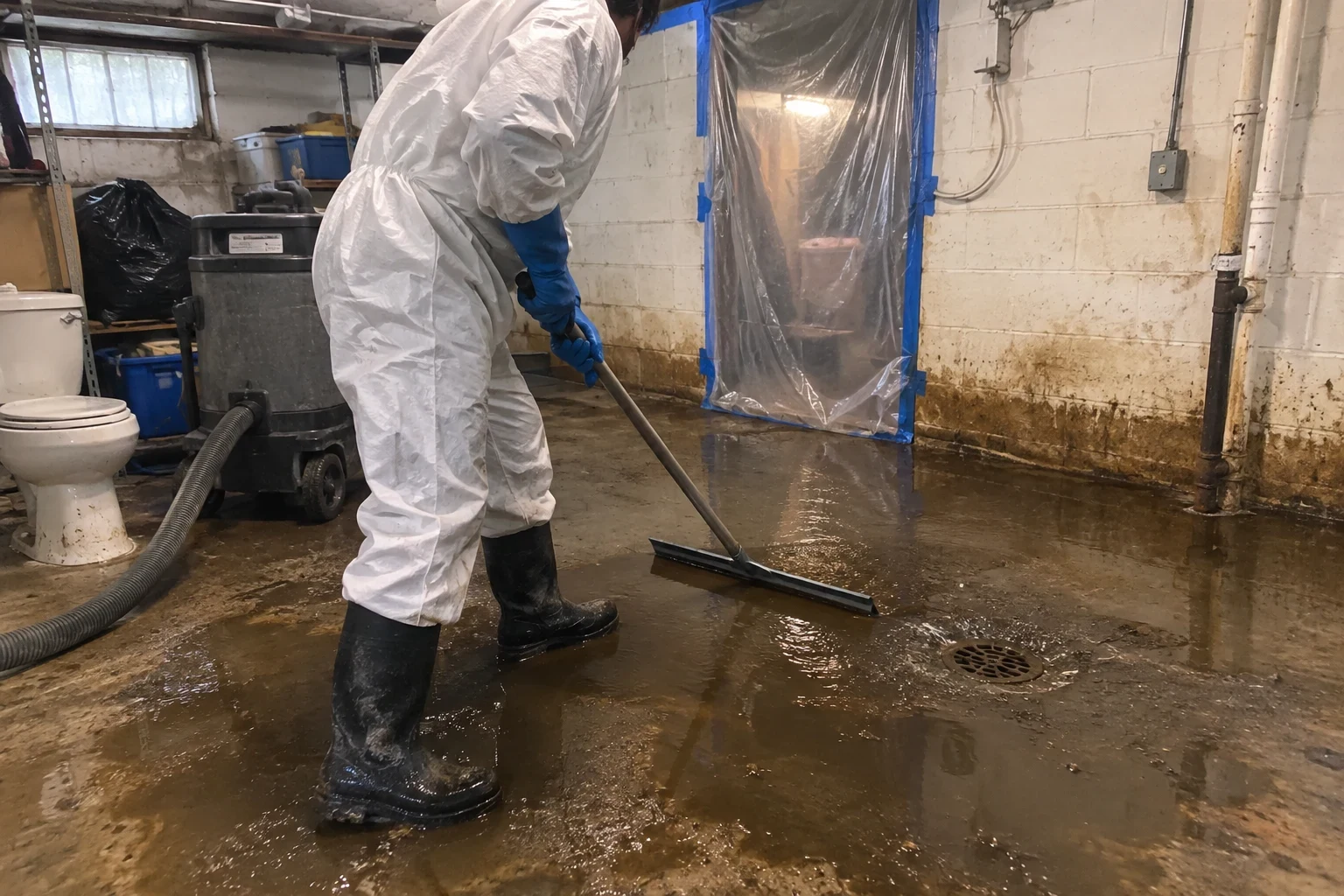
Sewage cleanup means removing contaminated water and every material it reached, then disinfecting and drying whatever stays. Restoration standards classify sewage as Category 3, the most hazardous grade of water, because it can carry E. coli, salmonella and hepatitis A. That changes the job. Carpet and pad that sewage touches are removed, not shampooed, and drywall is cut above the wet line instead of dried in place.
Most backups start in the main line between your home and the city sewer. Many older homes around Colonial Heights still run clay or cast iron laterals, and tree roots work into the joints until a heavy rain or a long wash cycle pushes water back out of the lowest drain. That is usually a basement floor drain, a lower-level toilet or a shower.
If water came up from a drain and smells like sewage, treat it as contaminated even if it looks clear. Keep children and pets out, and shut the HVAC off if a return vent sits in that room. Our crews are on site in 60 mins or less.
What our sewage cleanup includes
- Contained extraction
- Pumps remove the standing sewage, and extraction units draw what remains out of the flooring before the waste goes for proper disposal. Our technicians wear protective suits, gloves and respirators, so contamination stays in the work area instead of reaching clean rooms of your home.
- Removal of porous materials
- Any carpet, pad, insulation or drywall the sewage reached is taken out. We cut drywall in a straight line, typically 12 to 24 inches above the highest water mark, since gypsum pulls moisture upward and traps contamination behind its paper face. Cabinet bases and toe kicks made of particleboard often come out as well, because they swell and cannot be disinfected.
- Cleaning and disinfection
- Slabs, studs, subfloor and other hard materials get a thorough scrubbing, followed by an antimicrobial registered with the EPA. Scrubbing comes first because organic residue shields bacteria, and once it is gone the disinfectant can make direct contact.
- Air scrubbing and odor control
- During tear-out, HEPA air scrubbers capture airborne particles and hold the work area under negative pressure. We deal with odor by removing and cleaning the material producing it, never by covering it with fragrance.
- Structural drying
- After cleaning, we place dehumidifiers and air movers and log moisture in the framing and subfloor. The Drying and Dehumidifying page covers this stage in more depth.
- Insurance documentation
- We take photos of the source, the damage and every material that comes out, and record moisture readings each day. We work with most major insurance companies, and that record gives your adjuster what they need to evaluate the claim.
Signs you need sewage cleanup
Sewage coming back up a drain
Murky water surfacing at a basement drain, a lower-level toilet or a shower tells you the main line is blocked somewhere past that fixture. Hold off on flushing, laundry and showers anywhere in the house until the line is cleared.
Gurgling when other fixtures run
A toilet that bubbles while the washer empties, or a tub that gurgles after someone flushes, signals a partial blockage. A full backup often follows within days.
Several drains slowing together
A single sluggish sink is usually a local clog. When the kitchen, bathroom and laundry all slow down at the same time, the trouble is in the line they share.
Sewer smell below the living space
A sewage odor that lingers in a basement or crawlspace can point to a cracked pipe leaking under the house. Crawlspace soil and vapor barriers soak it up, so it seldom goes away without cleanup.
Odor or stains returning after a backup
When an old backup was mopped and the smell comes back weeks later, contamination is probably still in the pad, drywall or bottom plates. That leftover material also gives mold something to grow on.
What affects the cost of sewage cleanup
We price each backup from what the inspection turns up, not from a flat rate. Before work begins you get a written estimate broken out line by line. If opening a wall reveals damage nobody could see, we show you photos of it before anything is added.
Size of the affected area
Square footage sets how long extraction takes, how much material comes out and how many dehumidifiers and air movers the job needs.
Materials the sewage touched
Cleaning a bare slab is a small job next to a finished basement with carpet, drywall, baseboard and built-in cabinetry, all of which may need removal.
Time before cleanup started
The longer sewage stands, the further it wicks into studs, bottom plates and subfloor. A backup left more than a day usually calls for extra disinfection and longer drying, and mold becomes more likely.
Access and location
A low crawlspace takes more labor than an open basement, particularly when wet insulation and the vapor barrier have to be pulled out on your back.
Contents and rebuild
Moving, cleaning or discarding belongings adds hours. Rebuild is estimated as its own scope and may require a city permit.
How a sewage cleanup job runs
- 1
Free on-site inspection
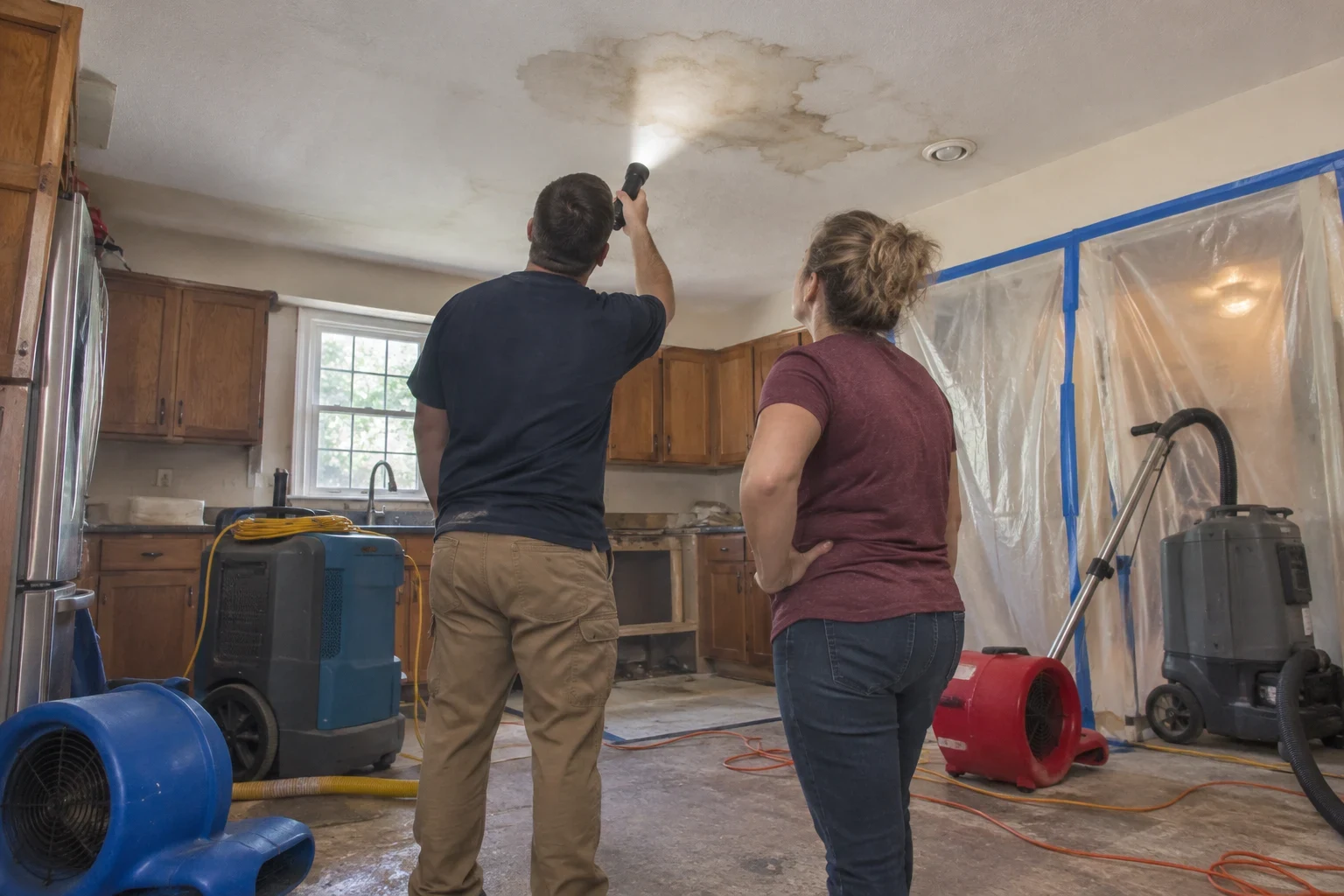
We find the source, check for electrical hazards near the water and confirm the contamination level. Moisture meters map how far the water traveled under flooring and into walls, and we photograph everything before work starts.
- 2
Containment and extraction
Plastic sheeting and zipper doors seal the affected area, and air scrubbers keep air moving out of it, not into the rest of your home. Then we extract the standing water.
- 3
Tear-out and disinfection
We remove contaminated flooring, drywall and insulation, bag it on site and haul it away. Every exposed surface is cleaned, then treated with antimicrobial.
- 4
Drying to a measured target
Equipment runs until framing and subfloor readings match dry reference points in unaffected parts of the house. We check readings daily and adjust equipment rather than guessing.
- 5
Final check and next steps
You get a list of what was removed and what needs rebuilding, which our Repairs and Rebuild crew can take on. Clearing or replacing the sewer line is plumbing work, so we tell your plumber exactly what we found.
Sewage cleanup questions
Is it safe to handle a minor sewage backup on my own?
If only a small amount reached sealed tile or bare concrete, gloves, a disinfectant and open windows are usually enough. The answer changes once sewage soaks into carpet, drywall or other porous material, because those have to be removed. Bleach stays on the surface of pad and gypsum, so contamination trapped inside keeps producing odor and can feed mold.
Will my homeowners policy pay for a sewer backup?
Plenty of standard policies leave out sewer backup unless a water backup endorsement was added, so look at your declarations page. We record the loss with photos and daily moisture logs and can walk you through how these claims typically proceed. Coverage is decided by your adjuster, not by us.
Can we stay in the house while you work?
Usually, when the backup is limited to a basement or a single room we can seal off. If your only bathroom is affected, or the HVAC system pulled contaminated air through the house, staying somewhere else for a few days is the safer choice.
Which belongings can be cleaned and which are lost?
Non-porous items such as metal, glass, sealed hardwood furniture and solid lumber framing generally clean and disinfect well. Mattresses, upholstered pieces, carpet pad, insulation and particleboard that sewage reached should be thrown out. We review each item with you before it is removed.
How many days does sewage cleanup take?
We normally finish extraction and tear-out on day one. Drying tends to take three to five days, depending on how saturated the framing is and how humid it is outside. Rebuilding starts after readings show the structure is dry.
Is mold likely after sewage gets into my home?
Wet drywall and wood can start growing mold in 24 to 48 hours, and the nutrients in sewage speed that along. Quick removal and drying stop most of it. If mold is already there when we arrive, our Mold Remediation service treats it under containment.
Get sewage out of your home safely
We answer around the clock for backups and overflows, and we are on site in 60 mins or less. The inspection is free, and you will know the scope before any work starts.