ServicesFlood Cleanup
Flood Cleanup in Colonial Heights
When storm runoff or rising water gets into your home, we pump it out, pull the soaked drywall, insulation and carpet that can't be saved, sanitize what's left and dry the framing until meters confirm it is ready to rebuild.
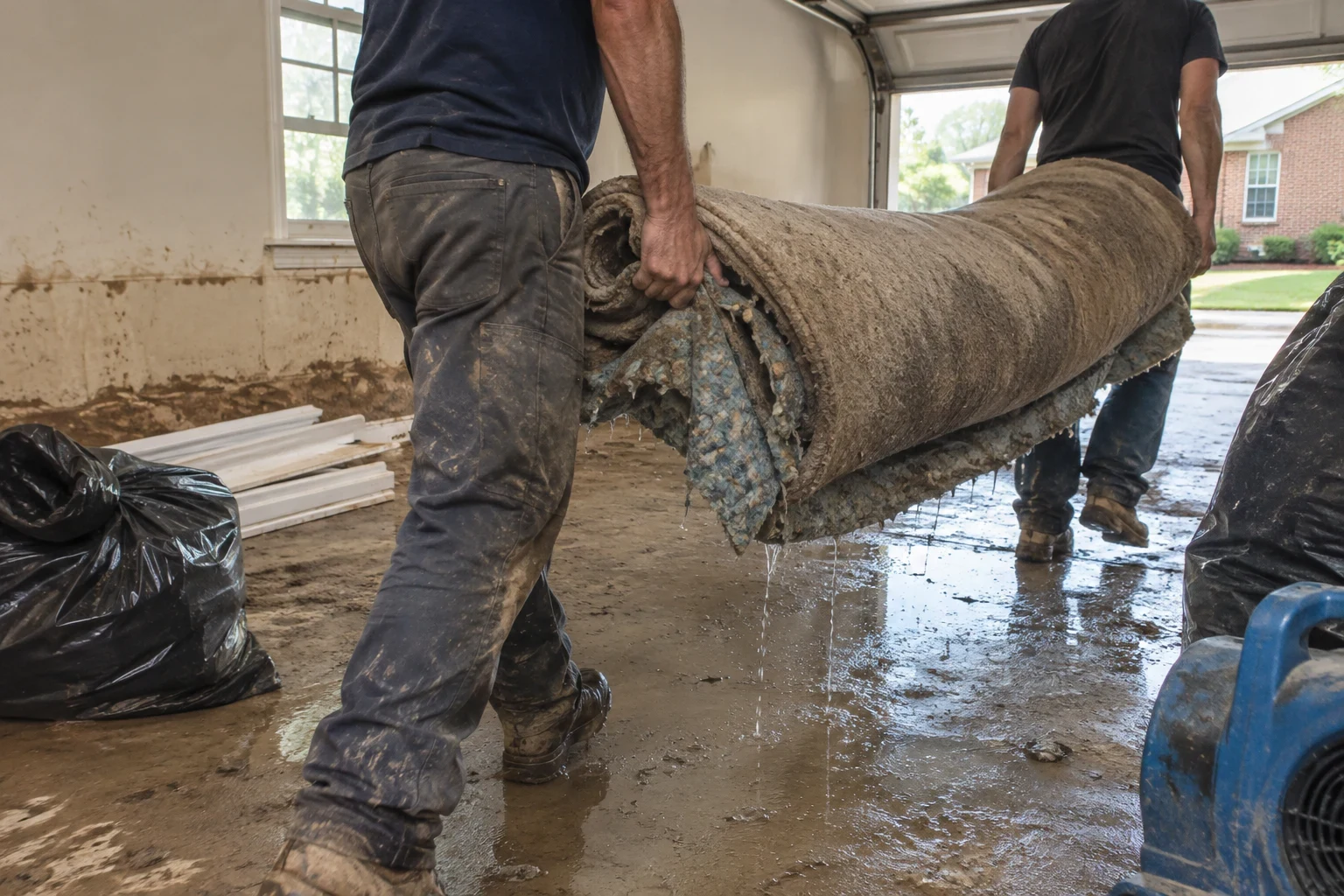
Flood cleanup: when outside water gets into your home
We call it flood cleanup when the water started outdoors: yard runoff, an overflowing creek, groundwater seeping up through a slab, or a crawl space that filled in a heavy storm. That water is classed as Category 3 because it brings soil, bacteria, fuel and lawn chemicals in with it. The classification changes how we work. Carpet pad, fiberglass batts, the bottom of the drywall and other porous materials it reached normally get removed instead of dried where they are.
A burst supply line inside the house is a different job, and water extraction plus drying and dehumidifying may be all you need. A backed-up drain or sewer line calls for sewage cleanup. We figure out which situation you have during the inspection, so no one tears out materials that could have stayed.
Plenty of houses around here are brick ranches and split-levels sitting over vented crawl spaces or partial basements, and floodwater likes to collect under the floor where nobody sees it. That is why we look beneath the subfloor on every flood job, not only in the rooms that look wet.
What the work includes
- Pumping and mud removal
- We start with pumps, truck-mounted for large volumes and portable for tight spots, until the standing water is gone. Then we shovel and squeegee out the silt floodwater leaves on the floor, since that mud traps moisture and bacteria against the surface.
- Flood cuts and tear-out
- Drywall is cut along a level line above the highest wet reading, usually 12 to 24 inches over the visible water mark, because gypsum wicks. Soaked insulation, carpet pad and swollen particleboard cabinet bases are removed and bagged.
- Crawl space cleanout
- Below the floor we remove waterlogged vapor barrier and insulation that has dropped, inspect the joists and sill plate, and flag wet ductwork for your HVAC contractor.
- Washing and antimicrobial
- Bare studs, subfloor and slab are scrubbed and treated with an EPA-registered antimicrobial. That cuts down bacteria and slows mold while the structure dries.
- Drying to verified readings
- Dehumidifiers and air movers stay on until the framing reads the same as dry reference spots in unaffected rooms. Readings are recorded every day.
- Records for your claim
- You receive photos, daily moisture logs and an itemized list of what was removed, and we can send copies to your adjuster if you want.
Signs your home needs flood cleanup
Water crossed the threshold
Runoff that came under an exterior door brought yard dirt and debris inside. Even an inch on the floor soaks the bottom plate and the lower edge of the drywall.
A stain line on the walls
A brown band or blistered paint marks how high the water stood. Drywall above that band is often wet as well, because gypsum pulls water upward.
Water pooled under the house
When a storm leaves standing water in the crawl space, the damp air rises into the living space and the joists can stay wet for weeks.
An earthy smell days later
A musty odor that gets stronger after the floor looks dry usually points to wet insulation or pad still hidden in a wall or floor, with mold starting.
Floors cupping or lifting
Hardwood that crowns at the seams or laminate that swells and pulls up is soaking up moisture from the subfloor underneath.
How a flood cleanup day runs
- 1
Inspection and safety check
We confirm the power is safe near wet areas, map the water's reach with moisture meters and thermal imaging, and photograph everything before anything is moved. You get a plain explanation of what has to come out and why.
- 2
Extraction and mud-out
Standing water is pumped, silt is removed, and contents are moved to a dry room or staged for you to sort through.
- 3
Tear-out and sanitizing
Flood cuts are made, wet insulation and flooring are removed, and every exposed surface is cleaned and treated before equipment goes in.
- 4
Drying and final readings
Drying typically takes three to five days depending on materials and humidity. We check readings each visit and pull equipment only when the framing tests dry, then hand off to repairs and rebuild if you want us to put the rooms back together.
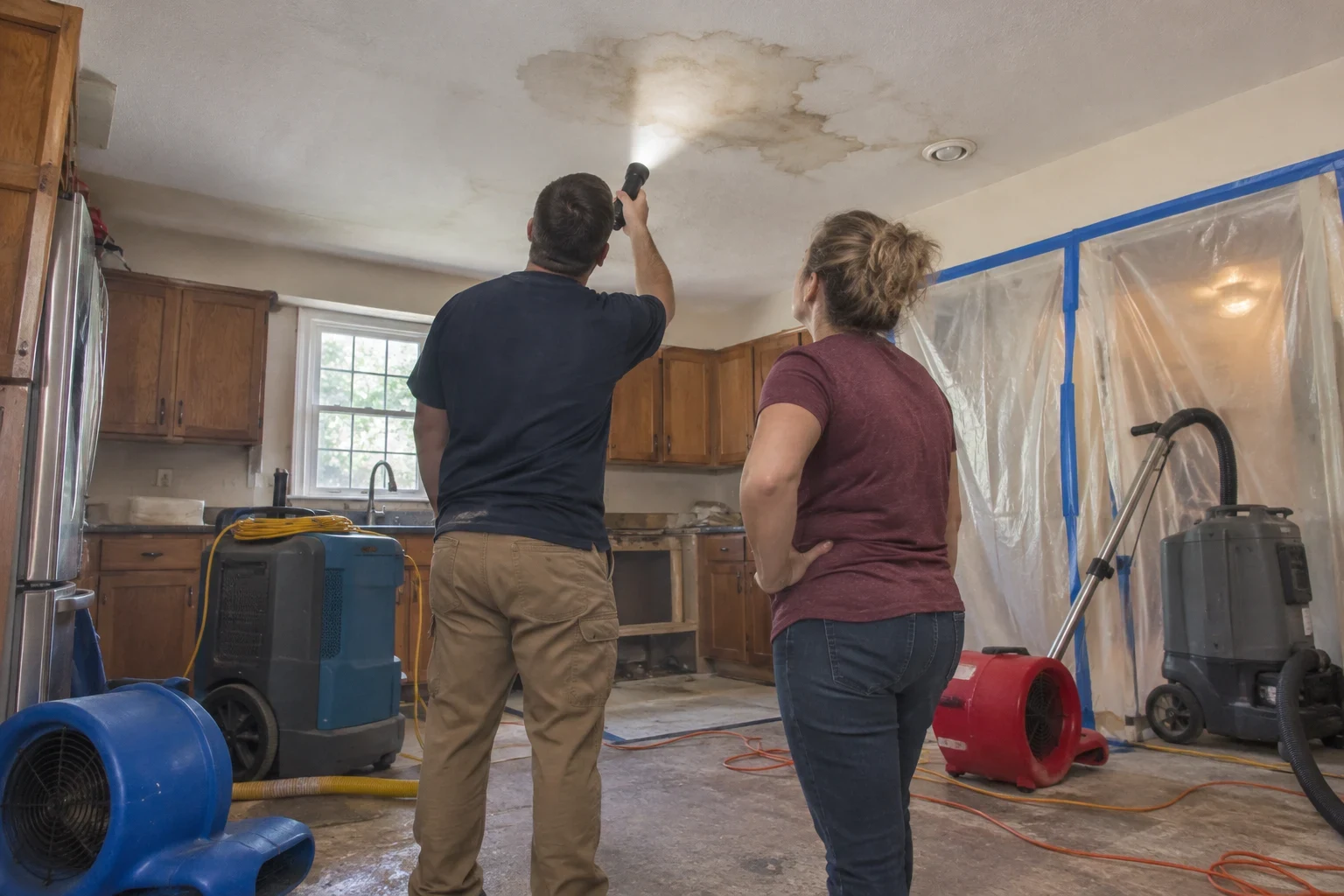
What moves the cost of flood cleanup
Every flood loss is different, so the price comes from what we find and measure in your home. Once the inspection is done, we put each item of the job in writing so you can see where the money goes. If something new turns up behind a wall, we call you before it goes on the bill.
- Affected area and water depth
- How many square feet got wet, and how far up the walls the water climbed, decide how much drywall, insulation and flooring we remove.
- Getting under the floor
- A tight crawl space under a ranch house, or water caught beneath a slab-on-grade addition, means slower hand work and extra equipment.
- What the rooms are built from
- Plaster walls, solid hardwood and built-in cabinets take more time to tear out or dry than drywall over vinyl plank.
- How long the water sat
- Each day before cleanup begins, water wicks further into wood and gypsum and mold gets a head start. That pushes the tear-out wider.
- Haul-away volume
- Everything we remove gets bagged and taken off site. Bigger losses need more trailer or dumpster loads.
Flood cleanup questions
Something not covered here? (804) 374-8594
Will my homeowners policy pay for flood damage?
Most standard homeowners policies leave out water that comes in from outside at ground level; that usually falls under a separate flood policy. Water from a roof leak or a broken pipe is treated differently. We record the source and the damage carefully, and your adjuster decides what is covered. We're happy to explain how claims like this tend to unfold, and we work with most major insurance companies.
Is it possible to keep carpet that sat in floodwater?
In most cases, no. Carpet and pad soak up the soil and bacteria in outside water, and cleaning can't get all of it back out, so standard practice is to throw them away. Hard surfaces such as tile and sealed concrete can usually be cleaned and kept.
How soon can a crew arrive after I call?
We answer flood calls around the clock, and our promise is to be on site in 60 mins or less. Getting pumps running early matters, because every hour the water sits it climbs higher into drywall and framing, and the tear-out grows with it.
Why do you cut the drywall higher than the water line?
Gypsum draws water up past the mark you can see. We find the top of the wet zone with a moisture meter and cut above it, so no damp board is left inside the wall cavity to grow mold.
Can I stay in my home while you work?
Often yes, if the damage is limited to rooms we can close off. Drying equipment runs day and night and makes noise. If the sanitizing or the amount of tear-out makes another place to sleep the smarter option, we'll tell you plainly.
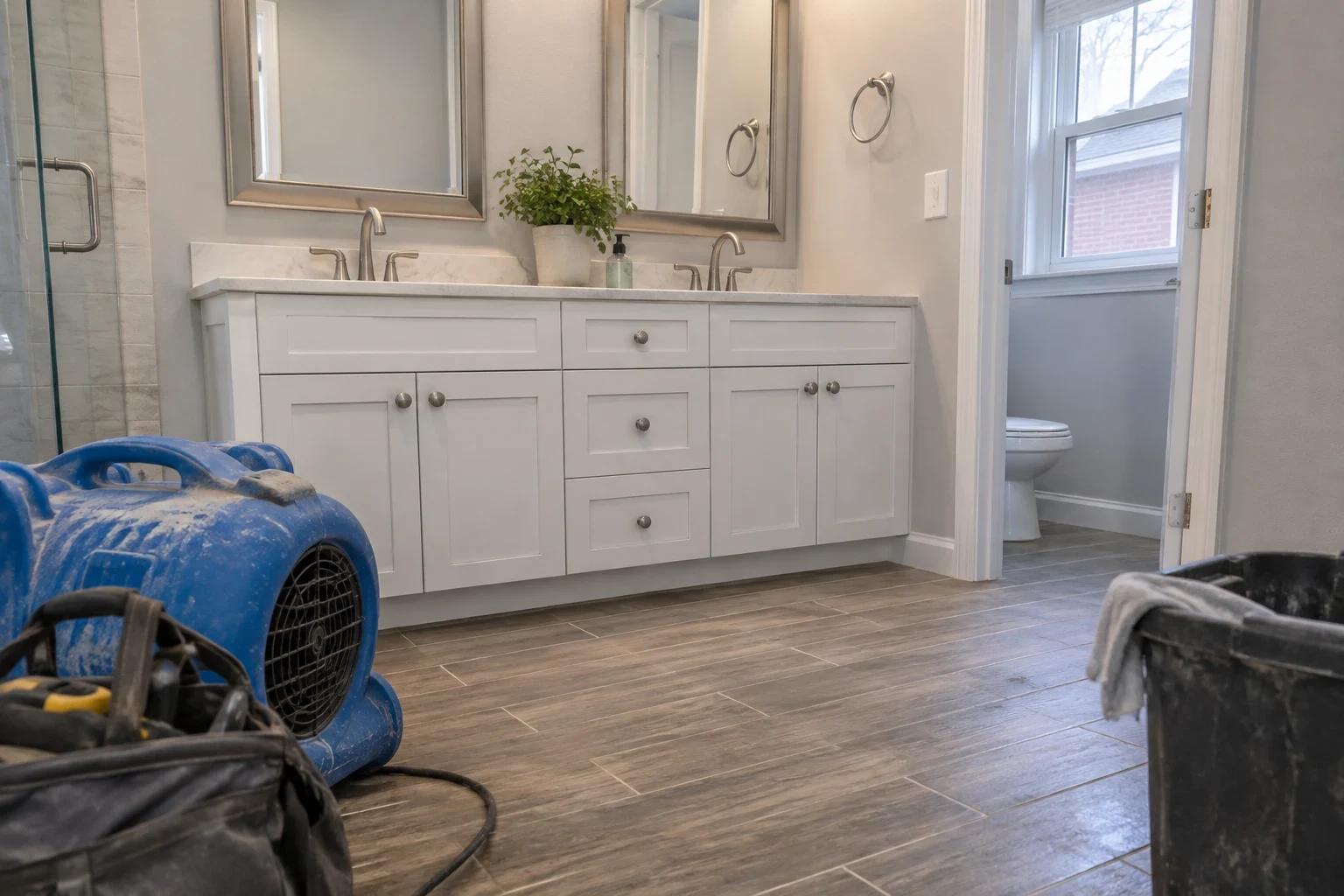
Get the floodwater out and the framing dry
Tell us where the water came in and how high it rose. We'll come look, measure moisture and explain exactly what needs to come out before any work begins.