ServicesMold Remediation
Mold Remediation in Colonial Heights
We remove mold from your home by finding the moisture that feeds it, sealing off the affected area, then cutting out or cleaning the materials it has rooted into. After that we dry the structure so the growth has nothing to come back to.
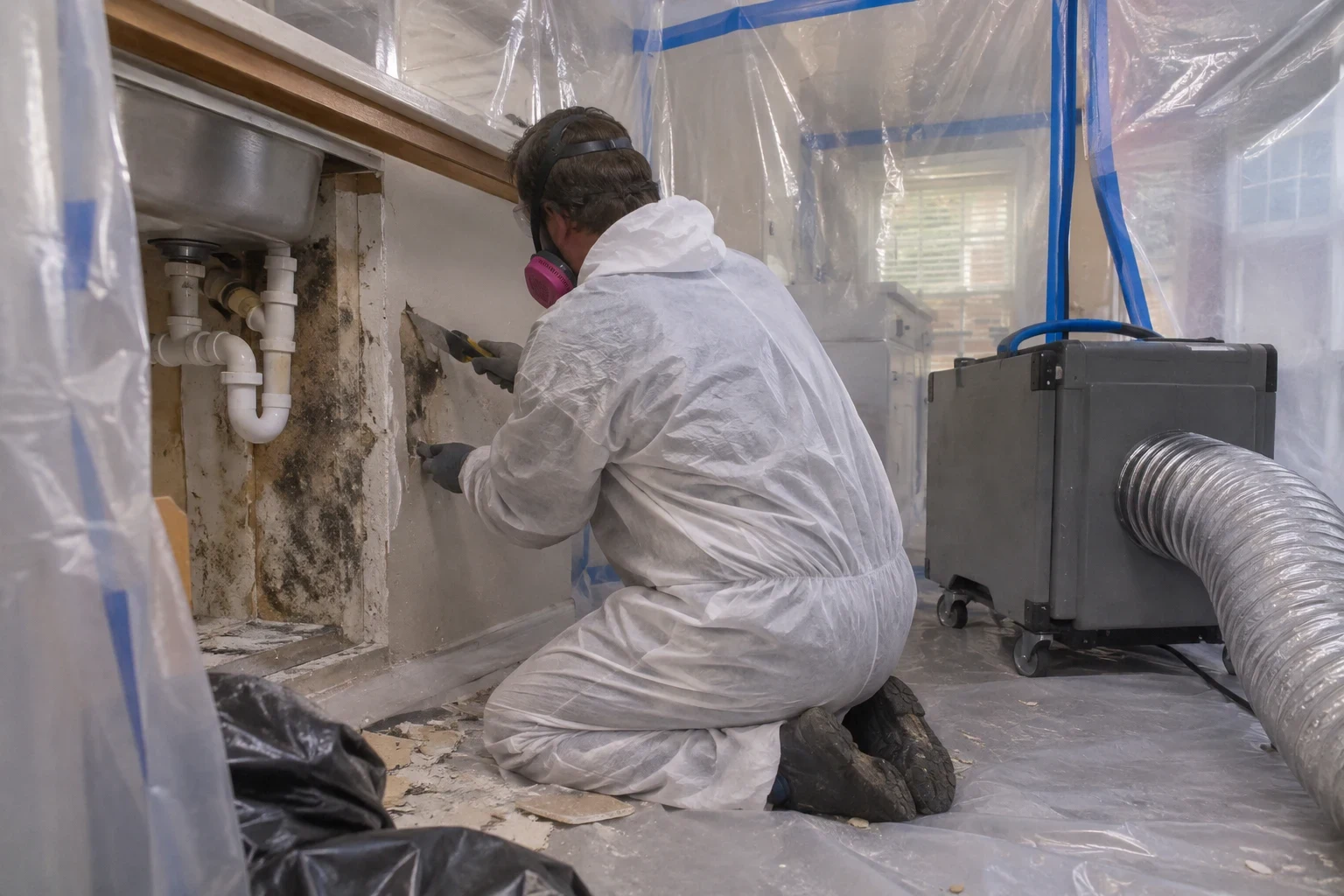
Mold is a moisture problem first
Mold spores are present in every house. They only colonize when a material stays damp, typically when drywall, carpet pad or subfloor has been wet for more than a day or two, or when indoor humidity sits high for weeks.
That is why we treat remediation as two jobs. We remove contaminated material under containment, and we find and stop the water source: a slow drip at a supply line, a sweating air handler, a crawlspace with no vapor barrier. Skip the second job and the growth returns, usually in the same spot.
Many homes around Colonial Heights sit over vented crawlspaces, and humid summers can hold moisture against joists and subfloor for months. When a musty smell has no obvious source, that is where we look first, so you are not paying to clean a wall while the cause stays under the floor.
What the work includes
Finding hidden moisture
Our technicians check walls, floors and framing with moisture meters and infrared imaging to locate damp areas the eye cannot pick up. We log the numbers for each room, so you can see where the damage starts and stops.
Containment and negative air
We wall off the work area with poly sheeting and a zipper door, seal nearby HVAC returns, and run HEPA air scrubbers that pull air out of the space. Spores disturbed during removal stay inside the containment instead of drifting into the rest of your home.
Removal of porous materials
Drywall, insulation, carpet pad and ceiling tile with growth cannot be reliably cleaned, so we cut them out past the visible edge and bag them inside containment before they leave the room.
Cleaning framing and subfloor
Studs, joists and plywood carry the structure, so when the wood is still sound we clean it instead of tearing it out. The work is HEPA vacuuming, sanding or wire brushing away surface growth, then an antimicrobial wipe. Sealer goes on only once the wood is clean and dry, never to hide what is left.
Photos and documentation
You receive photos of what we found and took out, along with the moisture readings, which are useful if you open an insurance claim.
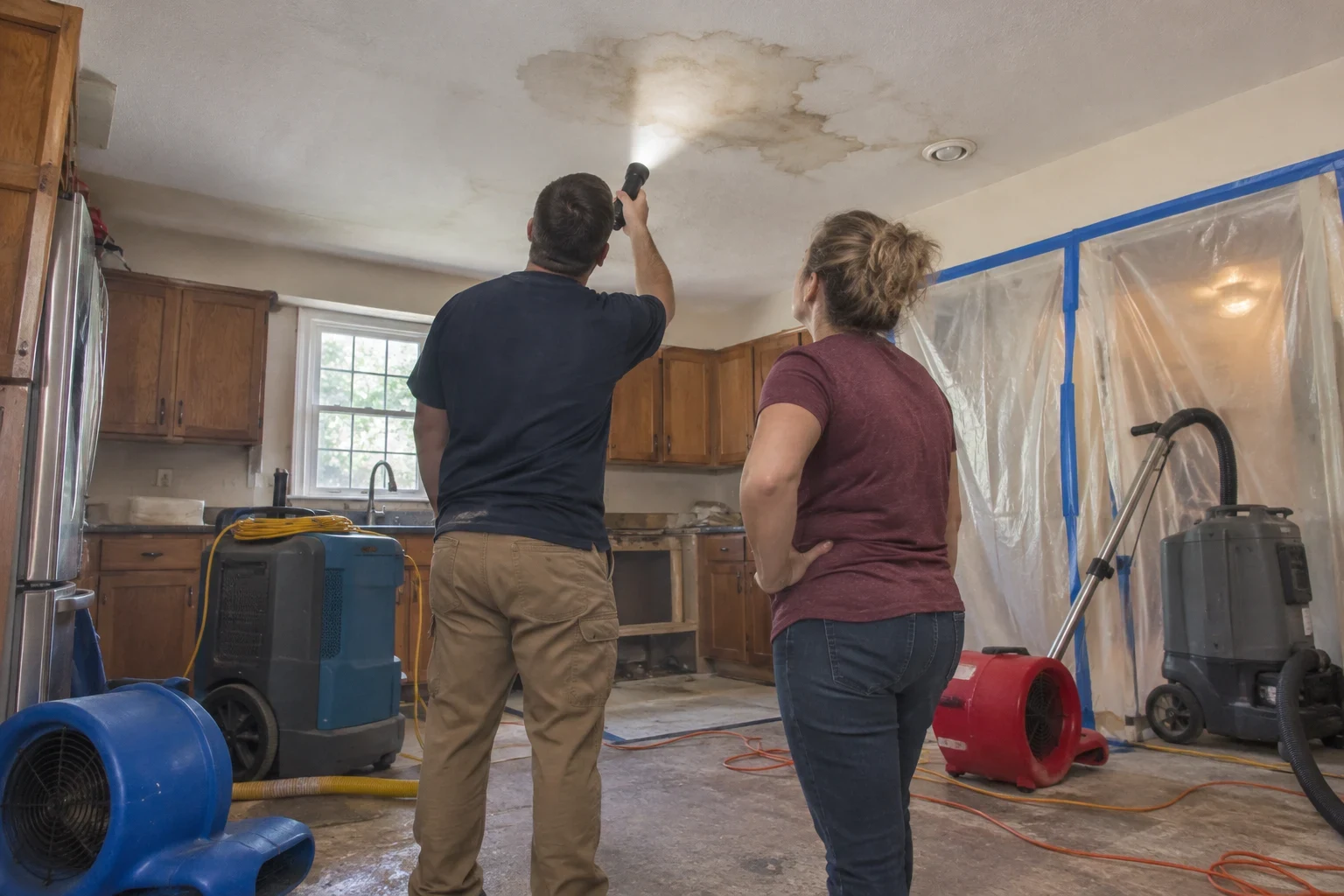
Signs you need mold remediation
- A musty smell that lingers
- An earthy odor that returns after cleaning usually means active growth inside a wall cavity, under flooring or in the crawlspace.
- Spotting low on exterior walls
- Gray, green or black specks along baseboards or behind furniture often trace back to condensation or a leak at the sill.
- Bubbled paint or soft drywall
- Paint lifts and gypsum softens when water is wicking up from below or in from behind. Mold tends to follow within days.
- An old leak that was never dried
- If a pipe, water heater or roof leak soaked materials and they were only wiped down, the cavity behind may still be wet.
- Damp crawlspace insulation
- Fiberglass batts that sag or fall from between the joists are usually holding water, and the wood they touch is often growing mold.
How a remediation job runs
- 1
Free on-site inspection
We look over the damaged space, check moisture levels with our meters and follow the water back to where it starts. Then we tell you plainly what has to come out, what can be cleaned and why it happened.
- 2
Set up containment
We lay protection along the route through your home, build the containment and switch on the HEPA air scrubbers before we touch any material.
- 3
Remove and clean
Moldy drywall, insulation and pad are cut out and bagged right in the work area. Framing and subfloor get HEPA vacuumed, cleaned and treated.
- 4
Dry and verify
Dehumidifiers and air movers keep running until the wood and remaining materials test dry, the same approach covered on our Drying and Dehumidifying page. We clean inside the containment before we take it down.
- 5
Close it back up
When the space is clean and dry, our Repairs and Rebuild crew can put back drywall, insulation and trim, so you are not left with an open wall.
What moves the cost of mold remediation
We price each job only after seeing it, since a stain on the surface seldom shows how far growth runs behind it. Before any work begins, we go through the estimate line by line, so the final bill matches what you agreed to.
- How far the growth has spread
- One bathroom wall calls for a compact containment. Growth across a basement or through several rooms means extra sheeting, additional HEPA scrubbers and longer hours on site.
- The material under the growth
- Drywall cuts out quickly. Framing, subfloor and sill plates take longer to clean properly, and wood that has started to rot must be replaced instead.
- Working room
- A shallow crawlspace or a tight attic slows every step and is harder to seal off than an open room, so labor goes up.
- Stopping the water
- Tightening a leaking supply line takes minutes. Adding a vapor barrier or correcting a drainage issue is larger work, and it is what keeps the mold from returning.
Mold remediation questions
- Can I just spray bleach on it?
- On tile or glass, possibly. On drywall and wood, bleach lightens the stain while the roots inside the material stay alive, and the water in the mix feeds more moisture into it. It also leaves the leak or humidity that caused the growth untouched.
- Will my insurance pay for mold removal?
- It comes down to the cause. A policy often pays when the growth traces back to an abrupt loss it already covers, like a supply line that split overnight, yet it may exclude growth from a drip that went on for months or from long-running humidity. Many policies also limit how much they will pay toward mold. We work with most major insurance companies and hand over our photos and moisture readings, but the adjuster makes the coverage call.
- Do we need to move out during the work?
- Most families stay put. The sealed containment and negative air pressure hold spores inside the work zone. If anyone at home has asthma or a weak immune system, or the growth covers a large area, we will discuss whether staying elsewhere for a short time is the better choice.
- What is your response time?
- We are on site in 60 mins or less, and our phones are answered day and night for active leaks and flooding. When the mold has been building slowly, we are also glad to book a visit around your schedule.
- Will the mold come back?
- Not as long as the moisture is gone. We find and stop the source, then confirm with meter readings that materials are dry before any wall or floor is closed.
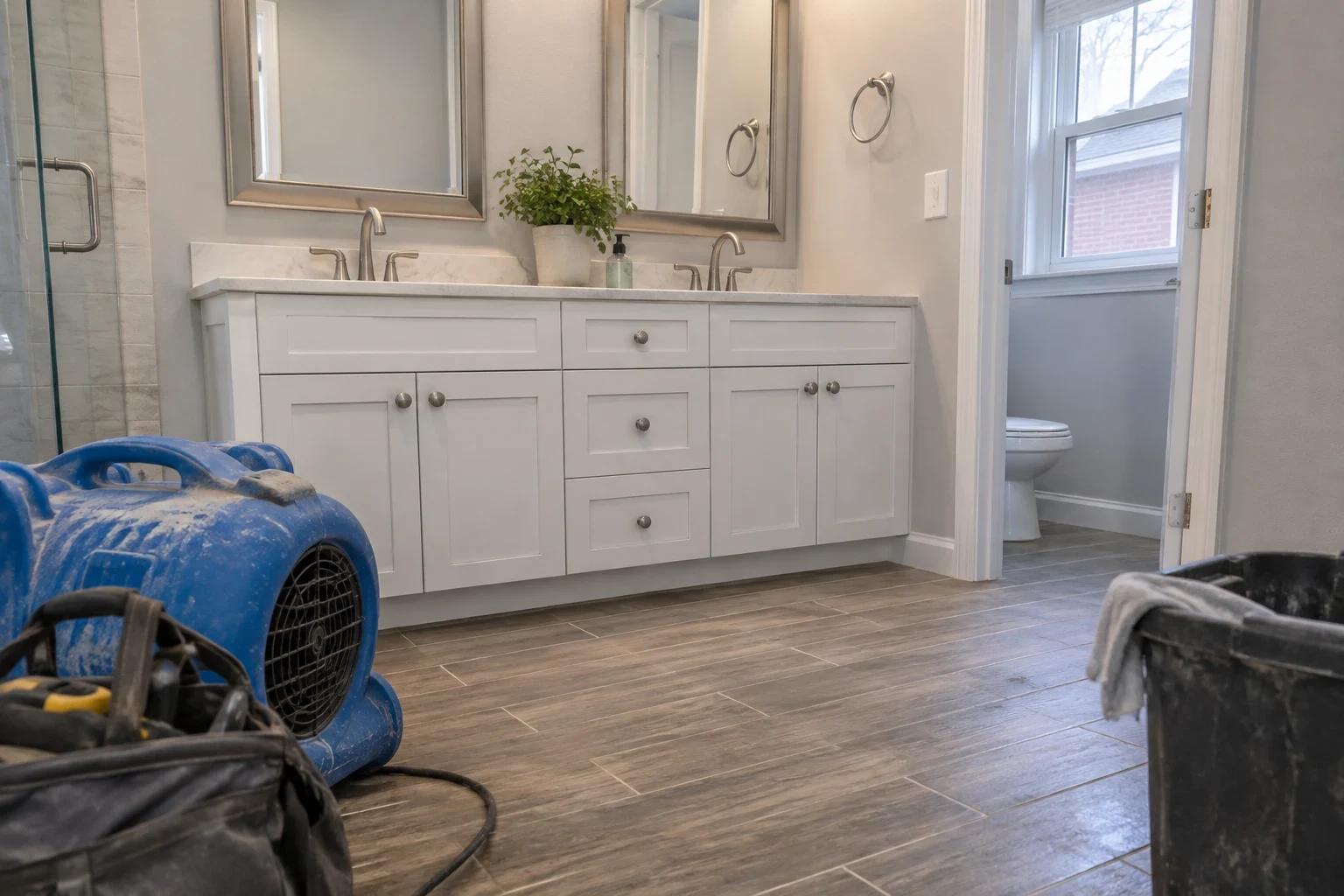
Find out what is behind that smell
We will trace the moisture, show you the readings and tell you plainly what needs to come out and what can stay.